
Researched and written by BG Vance. Last updated November 2026. Land rules, park access and tour pricing change, so confirm with the managing agency before you go.
Yooperlites are Michigan’s glow-in-the-dark rocks, and they have become one of the Upper Peninsula’s most popular night-time adventures. If you searched for Yooperlites in Lake Michigan, here is the short answer: they are overwhelmingly a Lake Superior rock. They were discovered on Lake Superior’s shore, most are found between Whitefish Point and Grand Marais and on the Keweenaw Peninsula, and only a few unconfirmed reports exist from Lake Michigan’s Lower Peninsula shore. This guide explains what Yooperlites are, where to look, what you need to hunt them at night, and the legal rules that trip up visitors, including two famous Yooperlite spots where collecting is illegal.
What Are Yooperlites?
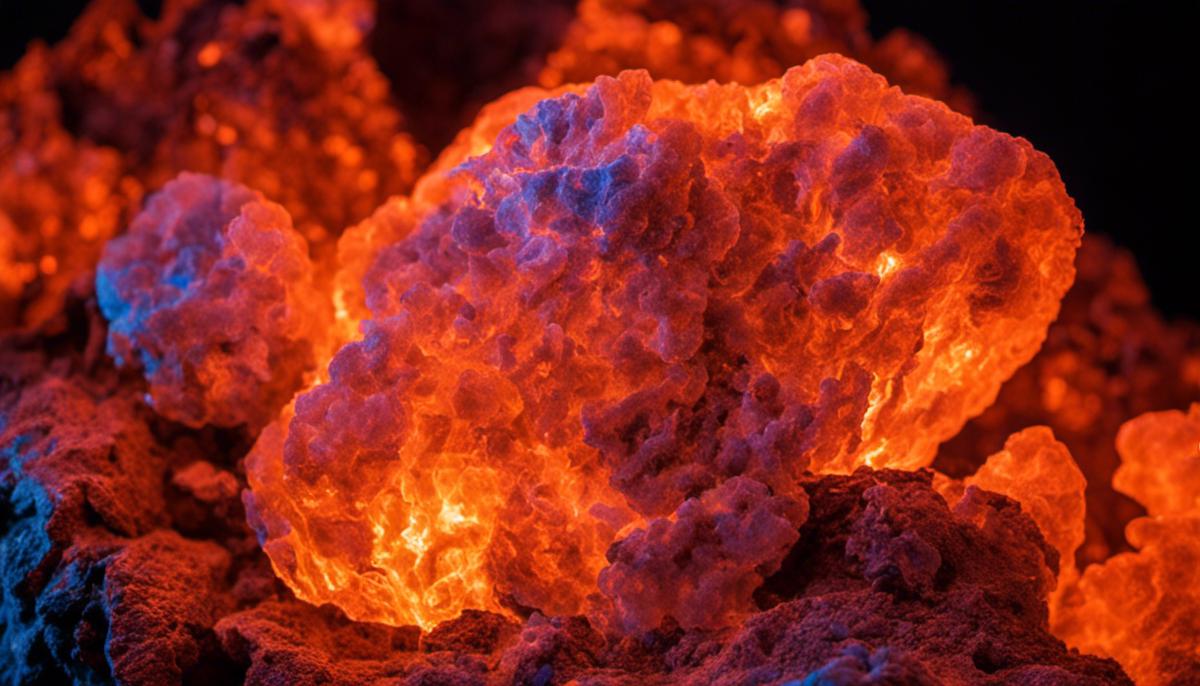
Yooperlites are syenite rocks that contain fluorescent sodalite. In daylight they look like ordinary gray beach pebbles. Under a longwave ultraviolet flashlight, the sodalite glows bright orange, yellow and sometimes pinkish. Sodalite is better known as a blue mineral, and this is the part of the old story that often gets garbled: Yooperlites are not made of pure sodalite, and they did not form in Michigan. They are intrusive igneous rocks believed to have come from the Coldwell Alkaline Complex in Ontario, Canada, and glaciers carried them across Lake Superior to Michigan’s shoreline, where waves rounded them into beach stones.
The Discovery Story
In June 2017, Upper Peninsula rockhound Erik Rintamaki was searching for Lake Superior agates at night with a UV flashlight, hoping the agates would fluoresce, when he noticed unfamiliar rocks glowing on the beach. He sent samples to Michigan Technological University and the University of Saskatchewan for testing. Their analysis found sodalite-bearing syenite, and Rintamaki’s find was described in Mineral News in 2018 as the first verified sodalite documented in Michigan. He coined the name “Yooperlite,” a play on “Yooper,” the nickname for Upper Peninsula residents, and has since trademarked it. Rintamaki was not the first person to see a glowing rock on the shore, but he was the first to bring them to geologists and turn the discovery into a phenomenon.
Can You Find Yooperlites in Lake Michigan?
Rarely, if at all. Almost every credible source puts Yooperlites on the Lake Superior shoreline, with a handful of unconfirmed reports from the Lake Michigan side of the Lower Peninsula near Point Betsie, north of Frankfort. Older guides, including the first version of this one, also list Sleeping Bear Dunes, Traverse City, Leland and Ludington as Yooperlite hunting grounds. I could not find reliable support for that, so if you hunt there, treat any glowing stone as a bonus, not a plan. Also note that Sleeping Bear Dunes is a National Lakeshore, where removing rocks is illegal. If you want a real Yooperlite hunt, go to Lake Superior.
Where to Find Yooperlites in Michigan
The Eastern Upper Peninsula
- Whitefish Point to Grand Marais: The classic stretch, and the area where most Yooperlites are reported.
- Muskallonge Lake State Park and Crisp Point: Popular beaches north of Newberry on the Lake Superior shore.
- Paradise and Brimley: Also named as productive areas.
- Grand Marais: Agate Beach and Sand Point Beach are often mentioned, though some shoreline here borders federal land, so check the boundaries.
The Keweenaw Peninsula
- Geologists suggest scouring the shoreline from Copper Harbor to Ontonagon, and Calumet Waterworks Park is another named spot. Copper Harbor and Calumet make good bases.
Marquette
- Presque Isle Park in Marquette is sometimes named by hunters, but it is a city park, so confirm its collecting rules.
Erik Rintamaki recommends Lake Superior beaches “from Whitefish Point west.” Yooperlites have also been reported on the Wisconsin and Minnesota sides of Lake Superior.
Where Collecting Is Legal and Where It Is Not
This is the part that gets visitors fined. Several famous Yooperlite beaches sit on federal land, where taking rocks is illegal.
| Location | Can you collect? |
|---|---|
| Michigan state parks and state land | Yes, up to 25 pounds of rocks per person per year, total, for personal use |
| Great Lakes shoreline below the ordinary high-water mark | Yes, same 25-pound annual limit |
| Pictured Rocks National Lakeshore | No. It is illegal, and rangers enforce it. |
| Sleeping Bear Dunes National Lakeshore | No |
| Isle Royale National Park | No |
| Whitefish Point refuge land (Seney National Wildlife Refuge) | No. Collecting is not allowed. |
| Great Lakes Shipwreck Historical Society beach at Whitefish Point | Daylight hours only, with the state’s 25-pound limit |
| Hiawatha and Ottawa National Forests | Small amounts for personal use, hand tools only |
| Private property | Only with the owner’s permission |
- The 25-pound limit is annual and total. It is not per beach or per trip.
- It is for personal use. Selling or trading what you collect from state land is not allowed without permits.
- You can walk the shore. A 2005 Michigan Supreme Court ruling established that anyone may walk the Great Lakes shoreline up to the ordinary high-water mark, even in front of private property. That does not allow you to cross private land to get there.
What You Need for a Yooperlite Hunt
- A longwave UV flashlight. A 365-nanometer light is the usual recommendation for getting sodalite to glow. Cheaper 395-nanometer lights work less well, so expect weaker results.
- UV-blocking glasses. UV light can irritate eyes, so protect them and never shine it at other people’s faces.
- A regular headlamp or red light, so you can see where you are walking between UV scans.
- Glow sticks or markers to flag finds so you can pick them up on your way back.
- A bag or bucket to carry your finds. You do not need a rock hammer, and digging up the beach is not allowed on many public lands.
- Warm layers, bug protection and a charged phone, because Lake Superior beaches get cold and cell service can be spotty.
How to Hunt Yooperlites Successfully
- Scout in daylight. Rintamaki suggests visiting your hunting area in the daytime to learn the terrain, find access points and spot hazards.
- Go after full dark. There is no daytime version of this hunt, and clouds and a moonless sky give the best contrast.
- Time it after storms. Waves bring fresh rocks ashore, and spring ice break-up is another good moment.
- Scan low and wide. Hold the light close to the ground and sweep it slowly across the wet pebble line at the water’s edge.
- Look for orange. A true Yooperlite glows orange or yellow, with some showing pink. Many other rocks and even trash fluoresce in other colors, so do not get discouraged by false alarms.
- Be patient. Most visitors find a few after an hour or two of slow scanning.
- Stay safe. Watch for surf, slippery rocks and cold water, tell someone where you are going, and do not hunt alone in remote areas.
- Leave no trace. Take only what you will keep, stay within the 25-pound limit, do not dig up vegetation, and pack out all trash and glow sticks.
Guided Yooperlite Tours
If you would rather have help, Erik Rintamaki runs guided night tours on Lake Superior through his Yooperlites website, typically from July through October, and sells UV flashlights and polished stones. Tour prices have changed over the years, from about $50 per person in 2018 to $150 per person in more recent listings, so check the site for current rates and dates.
Museums and Stops to Pair With Your Hunt
Great Lakes Shipwreck Museum and Whitefish Point Light Station (Paradise)
A good daytime stop on the way to the beach. The museum and lighthouse are open seasonally, May 1 through October 31, and the Historical Society’s beach allows daytime collecting within the state’s 25-pound limit. Remember that the surrounding refuge land does not allow collecting.
Address: 18335 N. Whitefish Point Road, Paradise, MI 49768
Website
Phone: (906) 635-1742
Tahquamenon Falls State Park (Paradise)
One of Michigan’s best waterfalls, and a natural pairing with a Whitefish Point trip. A Michigan Recreation Passport is required for vehicles. See our best Michigan vacations for families for more on the area.
Address: 41382 W. M-123, Paradise, MI 49768
Website
Phone: (906) 492-3415
A. E. Seaman Mineral Museum (Houghton)
The official mineral museum of the State of Michigan, on the Michigan Tech campus, with an extensive collection of Great Lakes minerals and a famous slab of native copper. It is a great stop if your Yooperlite trip includes the Keweenaw.
Address: 1404 E. Sharon Avenue, Houghton, MI 49931
Website
Phone: (906) 487-2572
Planning a Yooperlite Trip
- Where to stay: Newberry, Paradise and Grand Marais are the best bases for the eastern U.P. For the Keweenaw, stay in Copper Harbor or Calumet.
- When to go: Guided tours run July through October, spring brings fresh rock after the ice melts, and fall offers quiet beaches and a chance at the northern lights.
- Bring a Recreation Passport: It covers vehicle entry to Michigan state parks.
- Combine it with more: Pair your hunt with Pictured Rocks (view only, no collecting), Tahquamenon Falls and other U.P. sights. See our Upper Peninsula hub.
Frequently Asked Questions About Yooperlites
Are Yooperlites found in Lake Michigan?
Almost all reported finds are on Lake Superior. There are a few unconfirmed reports from Lake Michigan’s Lower Peninsula shore, but do not count on finding them there.
What are Yooperlites made of?
Syenite, an igneous rock, that contains fluorescent sodalite.
What color do Yooperlites glow?
Orange or yellow, and sometimes pinkish, under a longwave UV light.
What kind of flashlight do I need?
A 365-nanometer longwave UV flashlight is the standard recommendation.
Is it legal to collect Yooperlites in Michigan?
Yes on state land and Great Lakes shoreline below the ordinary high-water mark, up to 25 pounds per person per year. It is illegal in national lakeshores, including Pictured Rocks and Sleeping Bear Dunes, on Isle Royale, and on Whitefish Point refuge land.
When is the best time to hunt Yooperlites?
After dark, after storms, and in spring and fall. Summer nights start late in the U.P., so allow time.
Where was the first Yooperlite found?
On a Lake Superior shoreline in Michigan’s Upper Peninsula, by Erik Rintamaki, in June 2017.
More Upper Peninsula Guides
Explore our Upper Peninsula hub and best Michigan vacations for families.