
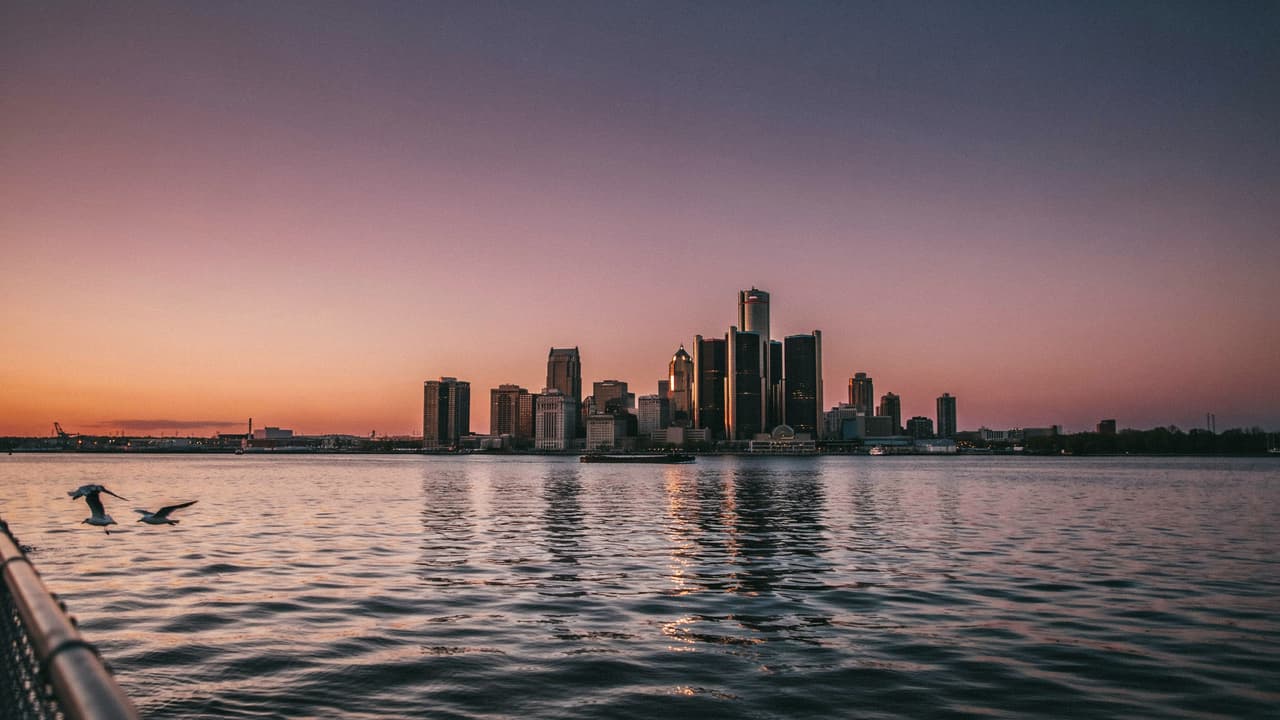
Detroit is the largest city in Michigan and one of the most layered travel destinations in the Midwest. It is the Motor City, where the automobile industry put the world on wheels. It is Motown, where Berry Gordy launched a record label in a small house in 1959. And it is a city on the rise, with restored Art Deco skyscrapers, a restored train station, a riverfront you can walk for miles and a food scene built on Coney dogs, square pizza and some of the best Mexican and Middle Eastern cooking in the Midwest.
I spent more than 20 years working in the Penobscot Building in downtown Detroit, so for me this city is more than a travel destination. It’s where I spent my workdays for two decades! Over the years I’ve walked the Riverwalk on lunch breaks, taken in the Tall Ships festival on the riverfront and joined in the events that fill Campus Martius throughout the year, including the 911 tribute that takes place there and also winter blast days and the Jazz Festival. If you’re visiting for the first time, my advice is if you walk, run, or bike the riverwalk, make sure to dress appropriately. Depending on the time of year, wind off the river can greatly affect your comfort.
This guide covers everything you need to plan a Detroit trip: the best things to do, a neighborhood-by-neighborhood breakdown, where to find the city’s signature foods, annual events, sample itineraries, how to get around and how to cross the river to Windsor, Ontario. For the wider region, see our Southeast Michigan guide.
On This Page
- Detroit at a Glance
- About Detroit: History and Quick Facts
- Detroit Neighborhoods Guide
- Top Things to Do in Detroit
- What to Eat in Detroit
- Detroit’s Music Heritage
- Annual Events
- Sample Itineraries
- Day Trips and Windsor
- When to Go
- Getting to and Around Detroit
- Practical Tips
- Detroit FAQ
Detroit at a Glance
| Best for | Museums, music history, architecture, auto heritage, food, sports, festivals and riverfront walks |
|---|---|
| Don’t miss | The Detroit Institute of Arts; the Motown Museum; Michigan Central Station; Belle Isle; Eastern Market |
| Neighborhoods to know | Downtown, Midtown, Corktown, Eastern Market, New Center, Southwest (Mexicantown), Greektown, the Riverfront and Belle Isle |
| Getting there | Detroit Metropolitan Wayne County Airport (DTW) in nearby Romulus; Amtrak to Detroit; I-75, I-94 and I-96; bridges and a tunnel from Windsor, Canada |
| Getting around | The free QLINE streetcar on Woodward Avenue, the free People Mover downtown, DDOT buses and a car for farther-flung stops |
| Best seasons | Summer for festivals and the riverfront; early fall for jazz and baseball; winter for the auto show and indoor museums |
| Nearby | Dearborn, Royal Oak, Ann Arbor and Grosse Pointe |
About Detroit: History and Quick Facts
French explorer Antoine de la Mothe Cadillac founded Detroit on July 24, 1701, when he and a group of settlers began building Fort Pontchartrain du Détroit on the north bank of the Detroit River. The name comes from the French word détroit, meaning “strait.” Detroit served as the capital of Michigan from 1805 to 1847, and the city grew explosively in the early 20th century with the rise of the auto industry. By 1920, it was the fourth-largest city in the United States.
- Population: 639,111 at the 2020 census, the largest of any city in Michigan. The Detroit metropolitan area had about 4.4 million people in 2020. The city’s population peaked at 1.85 million in 1950, and Census Bureau estimates have since shown it growing again, which Wikipedia reports as its first increase since 1950.
- Geography: Detroit sits on the Detroit River, which connects Lake Erie and Lake St. Clair, directly across from Windsor, Ontario. It is the largest U.S. city on the Canada border.
- Nicknames: The Motor City, Motown, the D and the 313 (after its area code), along with Hockeytown and Renaissance City.
- Cultural influence: Detroit gave rise to Motown and techno and played a major role in the development of jazz, hip-hop, rock and punk.
Detroit Neighborhoods Guide
Detroit is a big city, covering about 143 square miles, and each neighborhood has its own character. Use this table to decide where to spend your time, then read the details below.
| Neighborhood | Known for | Good for |
|---|---|---|
| Downtown | Campus Martius, Greektown, stadiums, the RiverWalk | First-timers, sports, nightlife |
| Midtown | The DIA, library, Science Center, Wayne State University | Museums and culture |
| Corktown | Michigan Central Station; Detroit’s oldest neighborhood | History, architecture, dining |
| Eastern Market | The historic market district, murals | Saturday mornings, food shopping |
| New Center | The Fisher Building; Ford Piquette Plant nearby | Architecture and auto history |
| Southwest / Mexicantown | Bakeries, restaurants, murals | Mexican food and culture |
| Riverfront and Belle Isle | The RiverWalk and a 982-acre island park | Outdoors and families |
| Indian Village and Lafayette Park | Historic homes and modernist architecture | Architecture lovers |
Downtown
Downtown Detroit is the city’s center and the easiest place to start. Campus Martius Park is often called the center of the city, and it hosts events year-round, including ice skating in winter. Nearby, Greektown is a small downtown enclave known for restaurants and nightlife, and Capitol Park is a historic district that has been seeing new life. The Detroit Tigers and Detroit Lions play downtown at Comerica Park and Ford Field, and the 50-block District Detroit area between downtown and Midtown is anchored by Little Caesars Arena. The People Mover loops through the district, and the Detroit RiverWalk lines the water.
Midtown
Midtown is Detroit’s cultural center, home to the Detroit Institute of Arts, the Detroit Public Library, the Michigan Science Center, Wayne State University and the Detroit Medical Center. It is a walkable neighborhood of museums, shops and restaurants, and it is connected to downtown and New Center by the QLINE.
Corktown
Founded in 1834, Corktown is Detroit’s oldest surviving neighborhood and was home to the city’s Irish immigrant community. Today, it blends historic housing with new development, and it is the home of Michigan Central Station, restaurants and local businesses. A MoGo bike share station sits on Michigan Avenue near the station.
Eastern Market
Eastern Market is described as the largest historic public market district in the country, and it operates year-round as both a food hub and a community gathering space. The market moved to its present site at Russell Street and Mack Avenue in 1891. Saturday is the main market day, and murals cover many of the district’s buildings. Independent shops line nearby Gratiot and Mack avenues.
New Center
About five miles north of downtown, New Center developed as an early corporate hub for the auto industry. It is home to the Fisher Building, an Albert Kahn masterpiece, and the Fisher Theatre. The QLINE connects New Center to Midtown and downtown. The eastern edge of New Center holds the Ford Piquette Avenue Plant, where Ford built the first Model Ts.
Southwest Detroit and Mexicantown
Southwest Detroit is home to Mexicantown, the city’s largest Mexican community. It is known for its bakeries, restaurants, murals and community events, and it is one of the best places in the city to eat. Nearby neighborhoods include Hubbard Farms, Springwells Village and Delray.
The Riverfront and Belle Isle
Detroit’s riverfront is one of its best assets. The 5.5-mile Riverwalk runs from near the Ambassador Bridge to the Belle Isle Bridge, and the Dequindre Cut greenway links it to Eastern Market. Rivertown, east of the Renaissance Center, is a mix of old warehouses and new development. I’ve walked the Riverwalk many times with coworkers and there is no better view of the Detroit river and Canada than being on the Riverwalk. You also get easier access to the Ren Cen from the riverwalk than entering form Jefferson Ave. The riverwalk is the easiest way to see the river without leaving downtown. Belle Isle Park, a 982-acre island in the Detroit River, is covered in detail below.
Indian Village, West Village and Lafayette Park
East of downtown, Indian Village and West Village are known for historic homes designed by notable architects, including Albert Kahn. Lafayette Park is a National Historic Landmark District known for its Mies van der Rohe-designed residences, and its parks and bike paths are worth a visit.
Top Things to Do in Detroit
Detroit Institute of Arts
The Detroit Institute of Arts (DIA) is one of the nation’s major art museums, with a collection of about 65,000 works. Its highlight is Diego Rivera’s Detroit Industry murals, a fresco cycle depicting the city’s auto industry that was a gift from Edsel Ford. The DIA sits in Midtown’s cultural district, a short walk from the Detroit Public Library and the Michigan Science Center.
Motown Museum
The Motown Museum occupies the West Grand Boulevard house where Berry Gordy founded Motown Records in 1959, the site known as “Hitsville U.S.A.” Tours take you through the original recording studio where artists recorded some of the most famous songs in American music. Reserve tickets in advance, since tours can sell out.
Charles H. Wright Museum of African American History
The Wright Museum, in Midtown, is a major museum of African American history and culture. The current 125,000-square-foot building was designed by the Black-owned architecture firm Sims-Varner and Associates and opened in 1997.
Detroit Historical Museum and Michigan Science Center
The Detroit Historical Society was founded in 1921 and opened the Detroit Historical Museum in 1928. The current museum building was dedicated in 1951, and its exhibits trace Detroit’s growth from a frontier town to a major urban area. The Michigan Science Center in Midtown is a hands-on science museum and a Smithsonian affiliate, and it is a good option for families.
Michigan Central Station
Michigan Central Station is Detroit’s most iconic building. The 18-story Beaux Arts train station in Corktown opened in 1913 and closed in 1988, and it sat abandoned for decades as a symbol of the city’s decline. Ford Motor Company led a six-year restoration that began in 2018 and was completed in 2024, turning the station into a mobility and innovation hub with public spaces. Ground-floor tours have been offered through Detroit History Tours, so check current options before your visit.
Ford Piquette Avenue Plant
Built in 1904, the Ford Piquette Avenue Plant was the first building constructed for the Ford Motor Company. It is where Henry Ford and his team built the first 15,000 Model Ts, and it is now a museum full of antique cars. It sits at 461 Piquette Avenue, on the eastern edge of New Center.
Art Deco Skyscrapers: The Guardian and Fisher Buildings
Detroit has some of the best Art Deco architecture in the country. The Guardian Building, built in 1928 and finished in 1929, was originally called the Union Trust Building and is nicknamed the “Cathedral of Commerce.” Its three-story vaulted lobby is covered in colorful tile from Pewabic Pottery and Rookwood Pottery. The Fisher Building, designed by Albert Kahn and completed in 1928, is often called Detroit’s “largest art object,” with vaulted ceilings and corridors adorned with more than 40 types of marble. It is a National Historic Landmark and houses the Fisher Theatre.
Other architectural landmarks include the Detroit Masonic Temple, described as the largest building of its kind in the world, the Renaissance Center, designed by John Portman and opened in 1977, and the Fox Theatre, a National Historic Landmark that was restored in 1987 and hosts concerts and shows.
Belle Isle Park
Belle Isle Park is a 982-acre island in the Detroit River, designed in part by Frederick Law Olmsted, the landscape architect behind Central Park. The City of Detroit owns the island and leases it to the Michigan Department of Natural Resources, and it became Michigan’s 102nd state park in 2014. It has a beach, trails, the Belle Isle Aquarium (described as the oldest aquarium in the country), the Anna Scripps Whitcomb Conservatory, the Belle Isle Nature Center (run by the Detroit Zoological Society), the Dossin Great Lakes Museum, the James Scott Memorial Fountain and the William Livingstone Memorial Lighthouse. The park grounds are open from 5 a.m. to 10 p.m.
Good to know: A Michigan Recreation Passport is required to drive onto the island. Pedestrians, cyclists and transit riders do not need one, and the DDOT #12 Conant bus stops near the aquarium and conservatory. Facility hours vary, and the Belle Isle Conservancy has listed the conservatory as closed until further notice, so check before you go.
The Detroit RiverWalk and the Dequindre Cut
The RiverWalk is a 5.5-mile path along the Detroit River, and the Dequindre Cut greenway runs about two miles from Eastern Market to the riverfront. Together they make an easy walking or biking route, with views of Windsor and passing freighters. USA TODAY’s 10Best readers have named the RiverWalk the best riverwalk in America.
Eastern Market
Eastern Market is a must-do, especially on Saturday morning, when the sheds fill with produce, flowers and food vendors. It is also a hub for food shops, murals and restaurants the rest of the week. See the neighborhood guide above.
Detroit Sports and Entertainment
Detroit is a major sports town. The Tigers (Comerica Park) and Lions (Ford Field) play downtown, and Little Caesars Arena anchors the District Detroit. The People Mover stops at Comerica Park and other downtown attractions. The Fox Theatre, the Fisher Theatre and other venues round out the live entertainment calendar.
Detroit Zoo
The Detroit Zoo is in nearby Royal Oak, not in Detroit proper. See our Royal Oak guide.
What to Eat in Detroit
Detroit’s food culture reflects its immigrant history, and several dishes are local originals. Hours and menus change, so verify before you visit.
Coney Dogs
The Detroit Coney dog is a beef hot dog in a steamed bun, topped with beanless chili, yellow mustard and chopped onion. It traces back to about 1917, when Greek immigrants opened quick-serve diners called “Coney Islands.” Two rivals, American Coney Island and Lafayette Coney Island, sit side by side downtown, and locals take sides.
Detroit-Style Pizza
Detroit-style pizza is rectangular, thick and airy, with cheese that caramelizes at the edges of the pan, and sauce poured over the top. It premiered in 1946 at Buddy’s, a neighborhood tavern that is now Buddy’s Pizza, and the style has since spread across the country.
Mexicantown
Southwest Detroit’s Mexicantown is the city’s top destination for Mexican food, with bakeries and restaurants along Bagley Street and West Vernor Highway. It is also known for its murals.
Middle Eastern Food and Delis
Metro Detroit has one of the largest Arab American communities in the United States, which means exceptional Middle Eastern restaurants, particularly in nearby Dearborn. The Detroit area is also known for kosher-style delis that serve double-baked rye bread, which few places outside the region offer.
Paczki and Hamtramck
Polish immigrants brought paczki, filled doughnuts, to Detroit in the 1880s, and Hamtramck, a small city completely surrounded by Detroit, celebrates them on Fat Tuesday. If you visit in late winter, it is worth the short trip.
Eastern Market
Eastern Market is a food destination in its own right, with butchers, bakeries, produce stands and restaurants. Saturday is the biggest day, and peak produce season runs roughly May through October.
Detroit’s Music Heritage
Few cities have shaped American music like Detroit. Motown Records, founded by Berry Gordy in 1959, produced the hits that defined the “Motown sound.” Detroit is also the birthplace of techno and played a major role in jazz, hip-hop, rock and punk. Today, you can visit the Motown Museum, catch a show at the Fox Theatre or the Fillmore, and attend major free festivals such as the Detroit Jazz Festival, which takes over downtown every Labor Day weekend.
Annual Events
Dates change each year, so confirm them on each event’s official website before you book.
| Event | When | Details |
|---|---|---|
| Detroit Auto Show | January to February | Returned to a winter schedule; the 2026 show ran January 26 to February 8 at Huntington Place downtown |
| Movement Electronic Music Festival | Memorial Day weekend | A multi-day festival celebrating Detroit’s techno heritage |
| Woodward Dream Cruise | Mid-August | A classic-car celebration along Woodward Avenue, mostly in the northern suburbs |
| Sail Detroit (Tall Ships) | Not annual; last held August 8 to 10, 2025 | Tall ships docked on the riverfront between Hart Plaza and the Renaissance Center. It was the first Detroit visit since 2001. The Tall Ships Challenge returns to the Great Lakes every three years, but a Detroit stop isn’t guaranteed. |
| Detroit Jazz Festival | Labor Day weekend | Free concerts in Hart Plaza, Campus Martius and downtown venues; billed as the largest free jazz festival in the world |
| Detroit Free Press Marathon | October | Runners cross the Ambassador Bridge to Windsor and return through the Detroit-Windsor Tunnel |
| America’s Thanksgiving Parade | Thanksgiving Day | Held since 1924, down Woodward Avenue |
| Detroit Tigers baseball | April to September | Home games at Comerica Park |
Sample Detroit Itineraries
These plans are built around the places above. Check hours and ticket availability before you go.
One Day in Detroit
- Morning: Visit the Detroit Institute of Arts in Midtown.
- Midday: Ride the QLINE downtown, and have a Coney dog or Detroit-style pizza.
- Afternoon: Walk the RiverWalk, then stop by Campus Martius.
- Evening: See a game or a show, or head to Eastern Market on a Saturday.
A Long Weekend (Three Days)
- Day 1: Downtown: the RiverWalk, Campus Martius and Greektown. Take in a game or show in the evening.
- Day 2: Midtown in the morning (the DIA and Wright Museum), then Corktown and Michigan Central Station.
- Day 3: Eastern Market on Saturday morning, then Belle Isle in the afternoon.
Motown and Music Day
- Morning: Tour the Motown Museum.
- Afternoon: Visit the Wright Museum and explore Midtown.
- Evening: Catch a concert at the Fox Theatre or another downtown venue.
Architecture and Auto Heritage Day
- Morning: Tour Michigan Central Station and Corktown.
- Midday: Visit the Ford Piquette Avenue Plant.
- Afternoon: See the Fisher Building in New Center, then the Guardian Building downtown.
With Kids
- Morning: Michigan Science Center.
- Afternoon: Belle Isle: the nature center, beach and aquarium, plus the Giant Slide.
- Next day: The Detroit Zoo in Royal Oak or The Henry Ford in Dearborn.
If It Rains
Detroit has plenty of indoor options: the DIA, the Wright Museum, the Detroit Historical Museum, the Michigan Science Center, the Ford Piquette Plant, the lobbies of the Guardian and Fisher buildings and Eastern Market’s covered sheds.
Day Trips from Detroit and Crossing to Windsor
- Dearborn: The Henry Ford, the Ford Rouge Factory Tour and the Arab American National Museum.
- Royal Oak: The Detroit Zoo and a lively downtown.
- Ann Arbor: University of Michigan, museums and gardens.
- Grosse Pointe: The Edsel & Eleanor Ford House and Lake St. Clair.
- Hamtramck: Polish heritage and paczki, surrounded by Detroit.
Visiting Windsor, Ontario
Windsor sits directly across the Detroit River. Three crossings connect the cities: the Ambassador Bridge (opened in 1929), the Detroit-Windsor Tunnel and the new Gordie Howe International Bridge, which opened to vehicle traffic on July 27, 2026. The Gordie Howe Bridge links I-75 in Detroit with Highway 401 in Ontario, and it is described as the longest cable-stayed bridge in North America. A shared pedestrian and bicycle path was scheduled to open in August 2026, so confirm its status before you plan a walk or ride across.
Travel documents: You will need a valid passport or other approved travel document to cross. Requirements change, so check official U.S. and Canadian border agency guidance before you travel.
When to Go: A Season-by-Season Planner
| Season | What’s happening | Planning notes |
|---|---|---|
| Spring | Tigers opening day; Movement on Memorial Day weekend; Eastern Market reopens fully | Weather can be changeable |
| Summer | RiverWalk, Belle Isle, concerts, Woodward Dream Cruise and baseball | Peak season for outdoor events |
| Fall | Detroit Jazz Festival (Labor Day weekend), Free Press Marathon (October), Thanksgiving parade | Pleasant weather and big events |
| Winter | Detroit Auto Show (January to February), ice skating at Campus Martius, indoor museums | Cold and snowy; museums are at their best |
Getting to and Around Detroit
- By air: Detroit Metropolitan Wayne County Airport (DTW) is in Romulus, about 20 minutes from Dearborn. The Detroit Air Xpress (DAX) bus connects the airport and downtown Detroit, with 16 round trips a day, according to a Michigan State University visitor guide.
- By train: Amtrak’s Wolverine serves Detroit, with connections to the QLINE. Check Amtrak for current schedules.
- By road: I-75 runs north-south through the city, I-94 east-west and I-96 from the west. The Ambassador Bridge, the Detroit-Windsor Tunnel and the Gordie Howe International Bridge connect to Canada.
- QLINE streetcar: A 3.3-mile route along Woodward Avenue between Congress Street and West Grand Boulevard, with 12 stops through Downtown, Midtown, the North End and New Center. The QLINE has been free to ride, and streetcars come about every 15 minutes.
- Detroit People Mover: A fully automated, elevated loop of about 2.9 miles with 13 stations around downtown, including Comerica Park and Greektown. It connects with the QLINE at Congress Street and Grand Circus Park and is free to ride.
- Buses and bikes: DDOT runs the city’s buses and SMART serves the suburbs. MoGo bike share has stations in places like Corktown.
- By car: A car is the easiest way to reach Belle Isle, Southwest Detroit, Dearborn and suburban attractions.
Practical Tips
- Book tours early: The Motown Museum and Michigan Central Station tours can sell out.
- Check event schedules: Big events close streets and fill parking. The Thanksgiving parade closes Woodward Avenue, and the Auto Show and Jazz Festival affect downtown traffic.
- Pair neighborhoods: Combine Midtown with New Center, and Corktown with downtown, to cut travel time.
- Belle Isle pass: You need a Recreation Passport to drive onto the island but not to walk, bike or ride the bus.
- Use common sense: As in any large city, stay aware of your surroundings, keep valuables out of sight in your car and stick to busy, well-lit areas at night.
- Where to stay: Downtown is the easiest base for first-timers because of the People Mover, QLINE and stadiums. Midtown puts you near the museums, and Corktown is close to Michigan Central Station.
Detroit FAQ
What is Detroit best known for?
Detroit is best known for the auto industry, Motown music, its Art Deco architecture, Coney dogs and Detroit-style pizza, and its pro sports teams.
What are the best things to do in Detroit?
Popular picks include the Detroit Institute of Arts, the Motown Museum, Michigan Central Station, Belle Isle, Eastern Market, the RiverWalk, the Guardian and Fisher buildings and a game or show downtown.
How many days do you need in Detroit?
Two to three days covers the main sights. Add a day for a trip to Dearborn, Royal Oak or Windsor.
Is Detroit walkable?
Downtown and Midtown are walkable, and the QLINE and People Mover link the main areas. Belle Isle, Southwest Detroit and the suburbs are easier by car.
Do I need a car in Detroit?
Not for downtown, Midtown and New Center, which the QLINE and People Mover connect. A car helps for Belle Isle, Mexicantown, Dearborn and day trips.
Is Belle Isle free?
Entry on foot, by bike or by bus is free. A Michigan Recreation Passport is required to drive onto the island. The Recreation Passport is $15 for Michigan-registered vehicles when added at plate renewal, and $42 annual or $12 daily for out-of-state vehicles (2026 prices; confirm on the Michigan DNR website).
Can I visit Windsor, Canada from Detroit?
Yes. You can cross by the Ambassador Bridge, the Detroit-Windsor Tunnel or the new Gordie Howe International Bridge, but you need a valid passport or other approved travel document.
What is Detroit-style pizza?
It is a rectangular pizza with a thick, airy crust, cheese baked to the edges of the pan so it caramelizes and sauce on top. It first appeared in 1946 at Buddy’s.
When is the best time to visit Detroit?
Summer is best for festivals, the riverfront and baseball, early fall for jazz and marathon season, and winter for the auto show and museums.
Is Detroit safe for visitors?
Like any large city, Detroit has areas with different levels of activity. Visitors who stick to busy areas, use common sense and check local advice generally have a good experience in downtown, Midtown, Corktown and Eastern Market.
Keep Planning
Sources and Further Reading
We build these guides from official and primary sources wherever possible. Details like hours, prices, tour availability and event dates change, so confirm them with the sources below before you go.
- Encyclopaedia Britannica: Detroit
- Belle Isle Conservancy: Frequently Asked Questions
- Belle Isle Conservancy: Map and Access
- Michigan DNR: Recreation Passport
- Regional Transit Authority of Southeast Michigan: QLINE
- Michigan State University: Getting Around Detroit
- Spectrum News: Gordie Howe International Bridge Opens
- Michigan Public: Gordie Howe Bridge and the Detroit Free Press Marathon
- Albert Kahn Legacy Foundation: Milwaukee Junction and the Ford Piquette Plant
- National Weather Service: Great Lakes Safety